Autoimmune diseases tied to higher sarcoidosis risk, new study finds
Risk highest with Sjögren’s; family history also strongly linked
Written by |




People with autoimmune diseases — especially Sjögren’s disease, which affects the glands that produce tears and saliva — may have a significantly higher risk of developing sarcoidosis, according to a study in Japan.
The strongest association was seen with Sjögren’s disease, while other autoimmune conditions were also significantly linked to increased risk. Overall, a history of autoimmune disease was significantly associated with about a 2.6 to 14 times higher risk depending on the condition, while a family history of sarcoidosis was significantly associated with about a 21-fold higher risk, the data showed.
“Although related studies have been conducted in Western and other Asian populations,” the researchers wrote, “this study is the first to demonstrate quantitatively … that [autoimmune diseases] … may be associated with the development of sarcoidosis in a Japanese population.”
The study, “Immune-mediated inflammatory diseases associated with sarcoidosis: A case-control study in Japan,” was published in Respiratory Medicine.

Autoimmune diseases may share links with sarcoidosis
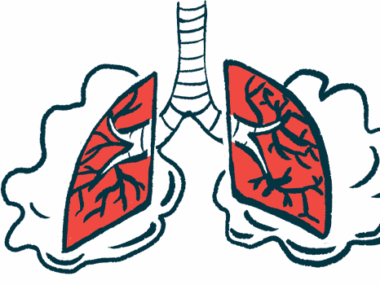
Sarcoidosis is marked by an overactive immune response that leads to the formation of small clusters of inflammatory cells, called granulomas, in different organs. These clusters can interfere with organ function and most commonly affect the lungs, lymph nodes, skin, and eyes.
Some of the mechanisms thought to drive sarcoidosis may overlap with those involved in autoimmune diseases, such as Sjögren’s, multiple sclerosis, and rheumatoid arthritis, in which the immune system mistakenly attacks healthy tissues.
Several studies have suggested that a personal or family history of autoimmune diseases may be linked to a higher risk of developing sarcoidosis.
However, this risk has been underexplored in Japan, particularly in relation to both personal and family history of autoimmune disease.
To address this gap, researchers evaluated sarcoidosis risk in 164 people newly diagnosed with sarcoidosis and 1,779 individuals undergoing routine municipal health checkups, who served as controls, across several regions in Japan.
Most participants were female (61% in the sarcoidosis group and 63.9% in the control group) and were ages 50 to 79 (73.1% and 78.1%). All completed questionnaires about demographic information, autoimmune disease history, and family history of related conditions.
After adjusting for age and sex, individuals with a history of autoimmune diseases had a significantly higher, roughly threefold risk of developing sarcoidosis than those without such conditions. The risk was highest for people with Sjögren’s disease, at about 14 times higher.
Specific autoimmune diseases tied to higher sarcoidosis risk
Other autoimmune diseases significantly associated with an increased risk of sarcoidosis were hypothyroidism, which was linked to about a five times higher risk, and rheumatoid arthritis, linked to about a 2.6 times higher risk.
In addition, individuals with a family history of sarcoidosis had about a 21-fold higher risk of developing the condition. Although a family history of rheumatoid arthritis was more frequently reported among participants with sarcoidosis, this association did not reach statistical significance.
For other conditions, including multiple sclerosis, the number of reported cases was too small to draw firm conclusions.
“These potential associations highlight possible immunogenetic and [disease mechanisms] links but should be interpreted with caution given the exploratory design of the research,” the researchers wrote.
The researchers emphasized that larger studies are needed to confirm these findings and better understand whether different autoimmune diseases may share common biological pathways with sarcoidosis.